
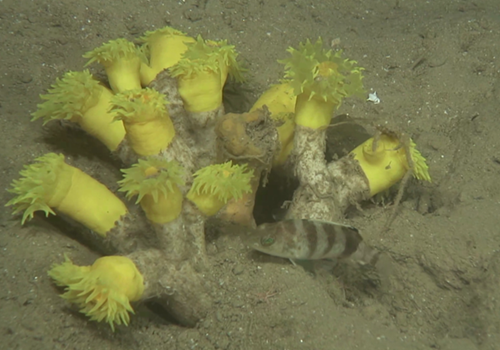
The fifth oceanographic campaign of the LIFE ECOREST project has confirmed significant progress in the active restoration of deep-sea habitats in Catalonia. The initiative, coordinated by the Institut de Ciències del Mar (ICM-CSIC) with the participation of the fishing sector, aims to recover approximately 30,000 hectares of vulnerable ecosystems through the reintroduction of structuring species such as corals, gorgonians, and sponges.
During three weeks of work along the coast of Barcelona and Girona, the scientific team monitored the organisms reintroduced in previous campaigns, evaluating their survival, growth, reproductive capacity, and their role in biodiversity recovery. To date, more than 8,000 specimens have been reintroduced into the marine environment.
The results indicate the beginning of the recovery of several areas, especially two no-fishing zones off the coast of Barcelona. Individuals from the first campaign (2022) have also been identified, with an estimated survival rate exceeding 90%, reinforcing the effectiveness of the restoration efforts.
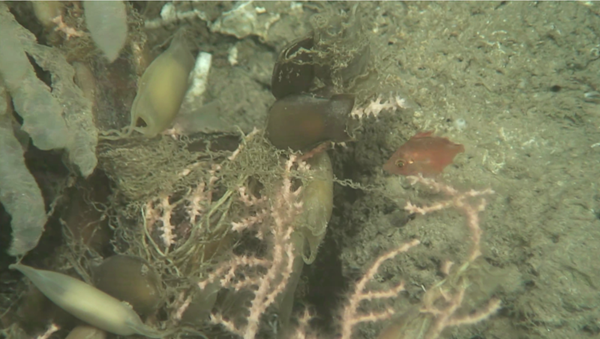 One of the most relevant aspects observed is the ecological “nursery” effect generated by these structures: the restored gorgonians and corals favor the presence of eggs, larvae, and juvenile fish, demonstrating their key role in the dynamics and maintenance of marine communities.
However, complex biological interactions have also been detected, such as the deposition of eggs by small-spotted catsharks (a small shark) on some gorgonians, which in certain cases can compromise the survival of the colonies by completely covering the structures and limiting their feeding.
“When three-dimensional structures are restored in these seabeds, an oasis effect is generated that attracts a wide variety of species and reactivates essential ecological processes”, explains Jordi Grinyó, coordinator of the LIFE ECOREST project. According to the researcher, the simultaneous presence of eggs in different stages within the same colony confirms the continued use of these restored habitats.
New lines of experimentation
The campaign has also incorporated new restoration techniques. Sponges have been reared under controlled conditions in the aquariums of the ICM-CSIC to assess their viability before reintroduction. These sponges have been housed in landers with underwater cameras to monitor growth and survival.
The combined effect of the joint reintroduction of different structural organisms (such as sponges and gorgonians) on the improvement of ecosystem services is being studied and compared to separate interventions.
Active Restoration and Participatory Management
The project has so far carried out five oceanographic campaigns (2022-2025) based on active restoration and continuous monitoring of the organisms. Specifically, in September 2022; in May and June 2023; in December 2023; in November–December 2024; and the latter in December 2025.
Reintroductions are carried out using the Badminton technique, which allows the organisms to be attached to pebbles to ensure their correct arrival and positioning on the seabed.
The initiative combines scientific research, conservation, and the participation of the fishing sector, which actively collaborates in the recovery, custody, and return of organisms to the sea. This joint effort has so far allowed for the recovery and reintroduction of more than 8,000 organisms.
In addition to restoration actions, the project promotes improved governance of marine protected areas andraises awareness about the importance of deep-sea habitats, key to biodiversity and functioning of marine ecosystems.
The LIFE ECOREST project, act ive until 2027,has the participation of the University of Barcelona, the Territorial Federation of Fishermen’s Guilds of Girona, the Biodiversity Foundation of MITECO and WWF Spain, with funding from the LIFE program of the European Union.