
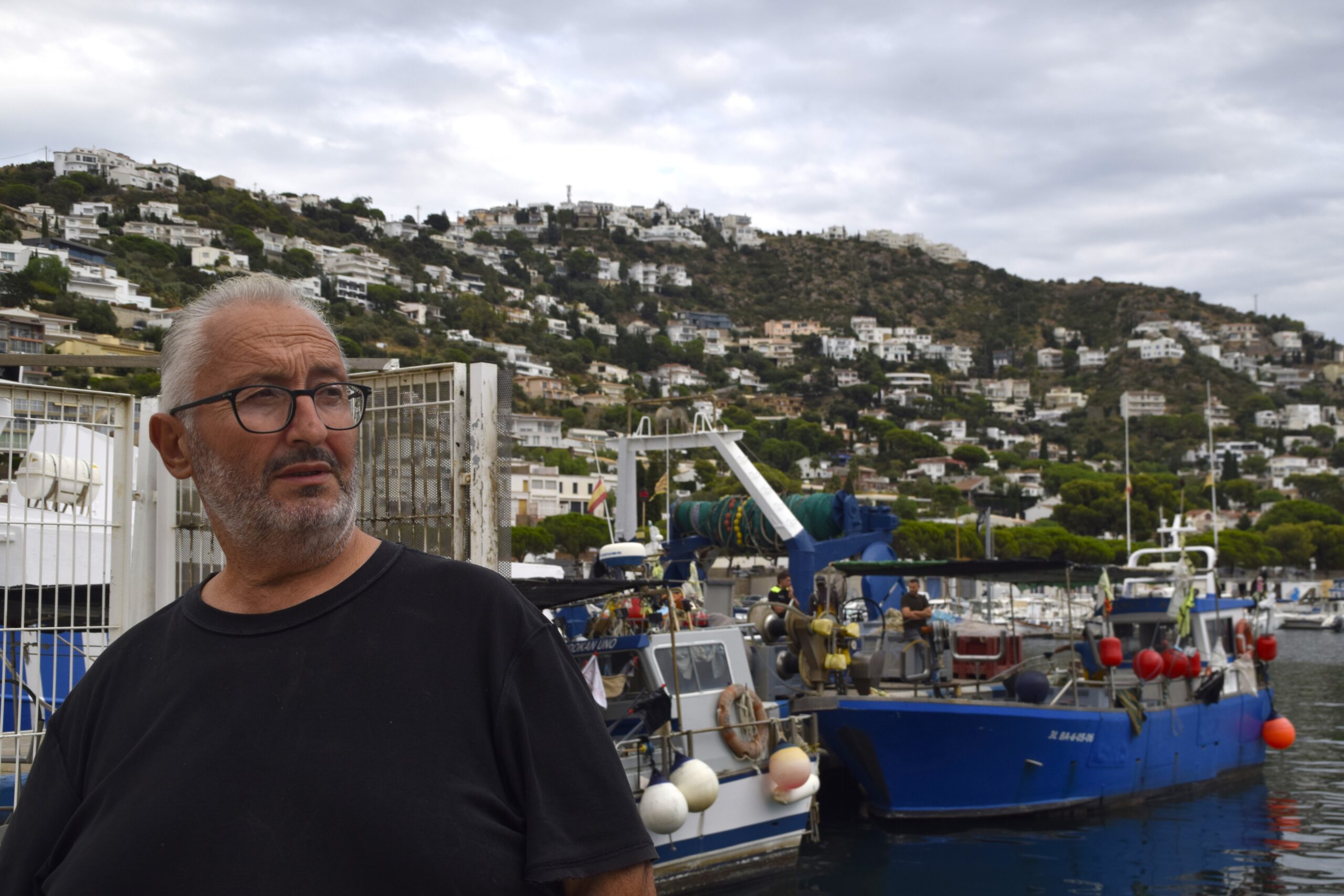
Joan González has been fishing for 43 years. He is the owner and skipper of a trammel net fishing vessel based in Roses (Girona) and has been involved in the LIFE ECOREST project since the beginning. He tells us that there is no longer a younger generation in his family willing to carry on the fishing tradition. He is the last in line. Despite the difficulties, he still feels that pursuing this profession is worthwhile.
Why did you decide to get involved in the LIFE ECOREST project?
I thought it was a good idea. We know there are areas where corals have disappeared, and if this project can help other species reproduce and recover over time, we will all benefit.
Since these areas are closed to fishing, they will recover, allowing fish populations to reproduce and spread to areas where we are allowed to fish. It will help regenerate the entire ecosystem.
How would you assess your experience of collaborating with the project over the years?
I believe we are giving corals a chance to survive. Over time, we will see that the project is working and that it benefits us all.
Now that the project is coming to an end, I think there is an opportunity to continue this work, provided that technical staff remain involved and keep supporting us as they have done so far. We will certainly continue to collaborate. The problem is that some of the fishers will retire in four or five years, and we don’t know what will happen then.
What are your thoughts on generational renewal in the fishing sector?
There have been six generations of fishers in my family. My great-grandfather, my grandfather, my father, my uncles, my cousins, and I will be the last. My son doesn’t want to become a fisher because he says it’s very hard work and involves long hours. He places greater importance on quality of life.
But being surrounded by nature every day is priceless. I’ve watched the sun rise countless times and seen fish and dolphins leaping out of the water, but I never get tired of it. Even days when the weather is bad can be beautiful, as long as you know what you’re doing.
This is no longer just a job; it’s a way of life. You have to feel passionate about it. There are good and bad days, and you have to accept that. But if you’re doing what you love, that’s a reward in itself.
You’ve been fishing for 43 years. What changes have you seen in the sea over that time?
It has changed a lot. New species have appeared, while others have disappeared. In the past, when you went out fishing at night, you could see plankton, but not anymore. And without plankton, there is less food for fish.
There are also a lot of tuna, which are major predators, and we’re seeing more dolphins near the coast searching for fish. Rising water temperatures and pollution are also a problem. Everything has been changing for quite some time.
LIFE ECOREST
The LIFE ECOREST project aims to restore approximately 30,000 hectares of deep-sea habitats in Catalonia through the active involvement of the fishing sector. In addition to research and conservation efforts, the project promotes participatory management, strengthens governance mechanisms, and raises public awareness about the need to protect deep-sea ecosystems.
Coordinated by the Institut de Ciències del Mar (ICM-CSIC) until 2026, the project involves key partners, including the Federació Territorial de Confraries de Pescadors de Girona, the Biodiversity Foundation (MITECO), the University of Barcelona, and WWF Spain. It is co-funded by the European Union’s LIFE Programme.